

Munich is one of the safest and most welcoming cities in Europe. With its stunning architecture, world-class museums, and vibrant beer culture, it attracts millions of visitors every year. And let’s be honest: most of the city is perfectly fine for tourists.
But here’s the thing—just because Munich is safe and clean, this doesn’t mean every district is a great choice for your vacation stay, especially as first time visitor. As a local who knows the city inside and out, I can tell you: where you stay matters a lot. Some areas are inconveniently located, lack charm, or simply don’t offer the kind of experience you’re looking for when visiting Munich.
In this article, I’ll walk you through the districts and areas you should think twice about when booking your accommodation—and suggest better alternatives nearby.
A Quick Disclaimer: "Avoid" is not "Dangerous"
Let me get this out of the way first: Munich does not have dangerous no-go areas in the way you might know from other major world cities. Even the districts I’ll mention below are completely safe for tourists compared to neighborhoods in cities like Paris, London, Los Angeles or Chicago.
But “safe” and “great for tourists” are two different things. Some areas are far from the sights, poorly connected, or simply dull and boring. Others might have a reputation that, while exaggerated, still makes for a less enjoyable stay. The goal here is to help you choose a base that enhances your Munich experience—not one that leaves you with a long commute every day.
Now let’s dive in.
Hasenbergl – Far, Functional, and Forgettable
Hasenbergl sits in the northern outskirts of Munich, roughly 8 kilometers (ca. 5 miles) from Marienplatz. It’s a district that grew out of emergency housing after World War II and has carried a social stigma ever since.
The good news: Hasenbergl has undergone significant redevelopment since the late 1990s. Modernized apartments, new community centers, and better infrastructure (subway) have improved the area considerably.
The bad news for tourists: It’s simply too far from everything you’d want to see. You’re looking at a 30–40 minute subway ride just to reach the city center. The neighborhood itself is mostly residential high-rises with limited dining, shopping, or entertainment options. Unless you have friends or family living here, there is no compelling reason to book accommodation in Hasenbergl.
Better alternative: Stay in Neuhausen or Maxvorstadt or Schwabing-West instead. These are closer to the city center, far more charming, and offer excellent public transport connections
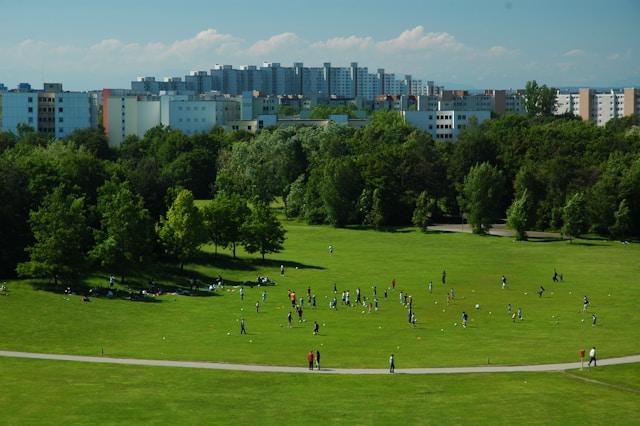
Neuperlach – Munich's "Satellite City"
Neuperlach, located in the southeast of Munich, was planned in the 1960s as a modern “satellite town” with high-rise apartments and plenty of green space. The idea was great on paper, but in practice, the area quickly developed into a socially segregated neighborhood as the middle and upper class moved elsewhere. So Neuperlach faced the same fate as Hasenbergl. Rising social issues, low incomes and an increasing bad reputation as “Glasscherbenviertel”. This is a German idion which literally translates to “district of broken glass”. The closest translations into english would be “skid row”, “hood” or “the wrong side of the tracks”.
Today, Neuperlach is a mixed bag. You’ll find a shopping mall (the PEP mall) and decent public transport via the U-Bahn (lines U5 and U7). But as a tourist base, it falls short.
Why you should think twice:
- Distance to the center: It takes about 25–35 minutes by subway to reach Marienplatz.
- Lack of tourist infrastructure: There are very few hotels, and you won’t find the cozy Bavarian atmosphere you came for.
- Architectural appeal: Let’s be honest—concrete high-rises from the 1970s are not what you came to Munich to see.
Better alternative: Giesing or Au (south of the center) offer a more authentic Munich experience and are much closer to the city’s main attractions..
The Area Around Donnersbergerbrücke (Arnulfpark)
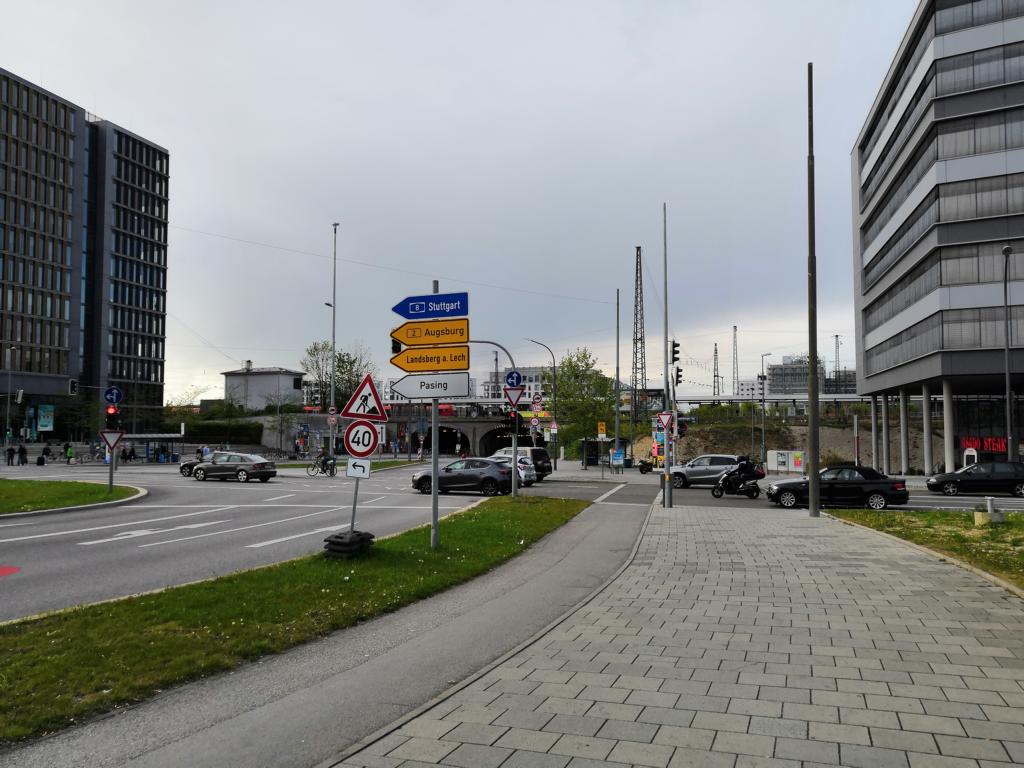
This one is a bit specific, but important. Around the S-Bahn station “Donnersbergerbrücke” in the Neuhausen-Nymphenburg district, you’ll find a cluster of hotels: Novotel, ibis, Citadines, and a few others. These are in or around the sub-quarter “Arnulfpark”.
On paper, this looks very convenient—it’s just west of the city center and seems close to the Oktoberfest grounds. But in practice, this area has some serious drawbacks:
What’s the problem?
- It feels isolated: Despite being technically close to the center, the area around Donnersbergerbrücke is a mix of railway tracks, office buildings, and busy roads. It lacks the cozy neighborhood feel you’d get just a few blocks further northwest in Neuhausen.
- Gritty at night: The underpasses and streets around the station can feel sketchy after dark. It’s not dangerous per se, but it’s not pleasant either.
- Oktoberfest crowds: These hotels primarily exist to house Oktoberfest visitors, and during the festival season. Outside of Oktoberfest, it feels oddly empty.
Better alternative: Stay around Rotkreuzplatz (Neuhausen) instead. It’s only a 10 to 15-minute walk away but offers a vibrant neighborhood with fantastic restaurants, cafés, and a weekly market.
Messestadt Riem – Only for Trade Fair Visitors
Messestadt Riem is located in the far east of Munich, built on the grounds of the former Munich Airport. Today, it’s home to the Munich Trade Fair Center (Messe München) and a large residential development.
Who should stay here? Only if you’re attending a trade fair (like bauma, ISH, or Internationale Handwerksmesse) and want to be within walking distance of the exhibition halls. For that purpose, the hotels here are perfectly fine. During Oktoberfest, these hotels often also offer cheaper rates than hotels near the Oktoberfest grounds, and are therefore especially booked by price sensitive Oktoberfest-visitors.
Who should NOT stay here? Almost everyone else. Messestadt Riem is:
- Far from the center: About 30–40 minutes by U-Bahn (line U2) to Old Town.
- Lacking in character: The area is modern, clean and family-friendly, but soul-less. You won’t find historic buildings, cozy beer gardens, or traditional Bavarian restaurants.
- Quiet outside business hours: Once the trade fair closes for the day, the neighborhood becomes a ghost town for tourists.
Better alternative: Haidhausen (east of the center) offers a similar proximity to the trade fair via public transport but with far more charm, great restaurants along Orleansplatz and Wiener Platz, and a lively local scene.
The Southern Main Station District (Südliches Bahnhofsviertel)
I’ve already covered this area in detail in my article “Is the Southern Main Station District in Munich a No-Go Area?“, so I’ll keep it brief here.
The area directly south of Munich’s Hauptbahnhof (Main Station) is what many tourists encounter first when arriving by train. It stretches from Sonnenstraße in the east to Martin-Greif-Straße in the west, and from Bayerstraße in the north to Pettenkoferstraße in the south.
Why it’s not ideal for your stay:
- It’s not dangerous, but it’s a bit gritty. You’ll encounter street-level drug dealing (at night in back alleys), beggars, and rip-off mini-markets.
- It lacks Bavarian charm. Instead of beer halls and traditional restaurants, you’ll find shisha bars, kebab shops, and check-cashing stores. Locals even call it “Little Istanbul” or “Little Arabia.”
- Some low-budget hotels and hostels that can be noisy and rundown.
That said, many hotels here are cheap and convenient for a short stopover. Please don’t get me wrong! There are also some truly excellent hotels here, full of history and charm, such as the 5-star Sofitel Bayerpost or the Arthotel Munich, to name just two. Still, this neighborhood can dampen the vacation mood if you were actually expecting Bavarian charm and coziness.
Better alternative: Hauptbahnhof Nord (the northern side of the station) or Maxvorstadt – both are much more pleasant while still being close to the train station.
Laim – Residential, Quiet, and a Little Too Far
Laim is a perfectly pleasant residential district in the west of Munich. It has nice streets, good bakeries, and decent connections via S-Bahn. But as a tourist, it’s a “meh” choice at best.
The issue: Laim is not ugly, not dangerous, and not inconvenient. It’s just… unremarkable. You’ll spend 15–25 minutes commuting to the center every day. The neighborhood has very few tourist attractions, and dining options are rather limited compared to districts closer to the center.
Better alternative: If you like the idea of a quiet residential area, go for Neuhausen or Schwabing West instead. Both offer a similar vibe but are better connected and have more to offer.
Moosach – A Miss for Most Tourists
Moosach, in the northwest of Munich, is another residential district that doesn’t offer much for visitors. It has good S-Bahn connections (lines S1, S2, S3, S4, S6, S8) as well as subway connections (line U3) and a few shopping options around the Moosach Bahnhof area.
But let’s be realistic: the main reason you might end up here is if you book a cheap hotel without checking the map. The city center is about 20–30 minutes away, and there’s very little to see or do in the immediate vicinity.
Better alternative: Nymphenburg or Neuhausen – both are closer to the center and offer beautiful parks (like the Nymphenburg Palace grounds) right on your doorstep or the many dining options around Rotkreuzplatz and along Nymphenburger Street.
Final Thoughts
Let me end with a friendly reminder: Munich is a fantastic city, and even the “worst” district here would be considered a perfectly fine neighborhood in many other cities around the world.
This article is not about fear—it’s about making smart choices as a first time visitor, so you can maximize your limited vacation time. Munich has so much to offer, and where you stay sets the tone for your entire trip.
Pick a central, charming, and well-connected district like Altstadt-Lehel, Maxvorstadt, Schwabing, or Neuhausen, and you’ll thank yourself every morning when you step outside and are immediately surrounded by the beauty and culture that make Munich so special.
Planning your trip to Munich? Check out my other articles on the best districts for tourists, local etiquette, and insider tips to make your stay unforgettable. And if you need personalized recommendations, just reach out—I’d love to help you craft the perfect Munich itinerary!