

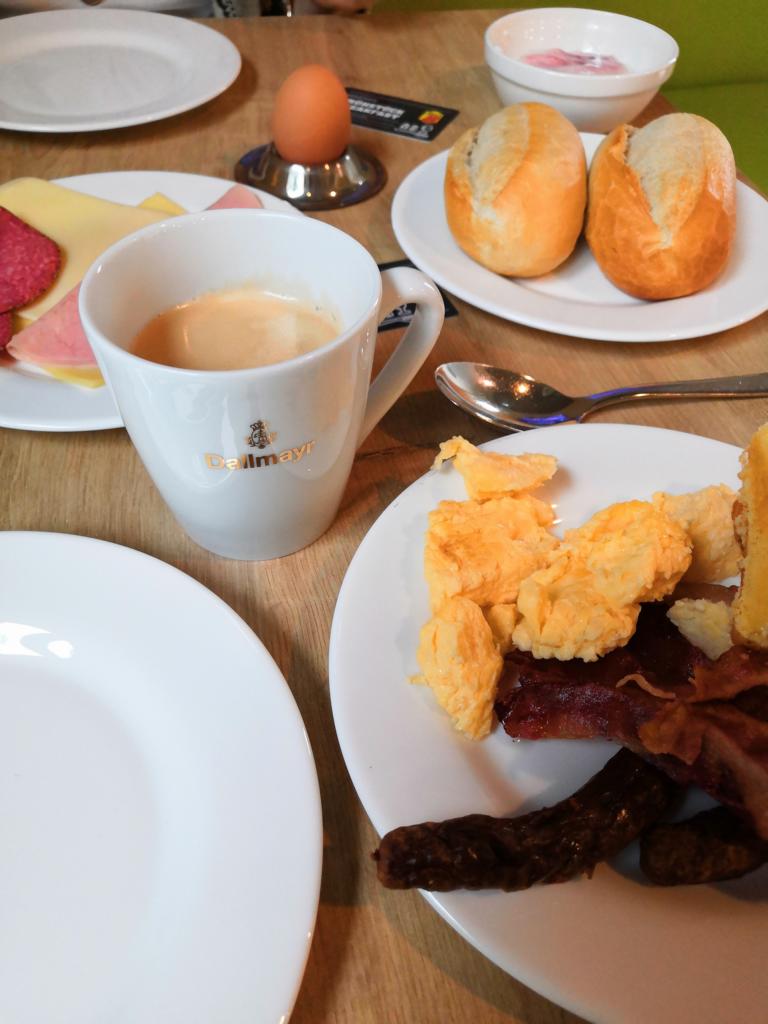
If you’ve ever spent a morning in continental Europe, especially Germany, France, Spain or Italy, you’ll know there’s something different about breakfast here. It’s not just a meal—it’s a moment. I’ve been thinking about this a lot lately, especially when I walk through Munich in the early hours and see bakeries with their many types of bread, rolls, snacks and the smell of fresh pretzels drifting into the still-quiet streets and subway stations. There’s a reverence for this time of day that feels deeply woven into the culture, and once you notice it, you start to see it everywhere.
More Than Just the First Meal
What strikes me most about continental breakfast culture is how it manages to be both simple and significant at the same time. In Paris, you’ll see someone at a café with nothing more than a croissant and a small cup of coffee, yet they’re completely present, watching the street wake up, not scrolling through a phone or rushing to finish. That image stays with you because it says so much about the European relationship with mornings. Breakfast isn’t just fuel to get through until lunch—it’s the first pleasure of the day, a small ritual that sets the entire tone.
This approach to breakfast is really about a deeper philosophy of living. When you sit down properly in the morning, even for just fifteen minutes, you’re making a quiet statement that your wellbeing matters, that the day deserves a proper beginning rather than a frantic scramble. I’ve noticed that Europeans tend to protect this time rather than sacrifice it, and there’s something genuinely admirable about that commitment.
The Stories Behind What We Eat

Every breakfast table in Europe tells a story, often one that goes back centuries. Take the croissant, which most people associate purely with France. Its roots actually trace back to Austrian bakers who settled in Paris, bringing with them the “kipferl”, a crescent-shaped pastry that Parisian bakers then refined into the flaky, buttery creation we know today. When a French family breaks apart croissants on a Sunday morning, they’re participating in a tradition shaped by migration, craftsmanship, and centuries of culinary evolution—even if nobody at the table is thinking about that history in the moment.
Similarly, the German pretzel carries symbolic weight most visitors never suspect. The shape, with its three loops, was originally designed by monks in the early Middle Ages to represent arms crossed in prayer, and for a long time the pretzel was associated with spiritual devotion and good luck. Now it’s just something you grab from a bakery on your way to work, but that’s precisely what makes European food culture so rich—the way deep history hides in plain sight inside the most ordinary routines.
And then there’s coffee, which deserves its own chapter in any discussion of European breakfast. The Italian espresso isn’t just a drink—it’s a social institution. Standing at a bar in Rome or Milan, knocking back a tiny cup of intense coffee in what feels like thirty seconds, you might think it’s all about efficiency. But that would miss the point entirely. The ritual is about a shared moment, however brief, a collective pause before the day scatters everyone in different directions. It’s the same spirit you find in a Viennese coffeehouse where someone lingers over a “Melange” (vienna roast coffee with milk) for an hour, reading the newspaper. Two very different approaches, but both rooted in the same understanding: coffee is never just coffee.
A Social Anchor in the Morning
One thing that separates continental European breakfast habits from what I’ve observed elsewhere is the social dimension. Breakfast here isn’t typically a solitary affair consumed in transit. In Germany, it’s perfectly normal to meet a colleague at the bakery before work, to stand together at a high table with a pretzel and a coffee and catch up before the office day begins. In France, families often gather properly at the kitchen table, even on weekdays, dipping tartines into bowls of café au lait and actually talking to each other.
I’ve always been fascinated by the Bavarian tradition of the Frühschoppen, which takes this social aspect even further. It’s essentially a mid-morning gathering—after church on Sundays, or sometimes also during the week—where people come together in a traditional restaurant for Weisswurst, pretzels, sweet mustard, and yes, often a beer. There’s an old Bavarian rule that the white sausages must be eaten before the church bells ring at noon, which sounds like folklore but is actually rooted in practical food preservation from the days before refrigeration. The sausages were made fresh in the morning and needed to be consumed quickly. What began as a necessity has become a cherished custom, an excuse to gather early and celebrate the morning together.
When in Munich, you should definitely try out this tradition and have a Bavarian breakfast in one of the many traditional restaurants.
What This Means for Travelers
If you’re visiting a continental European city, whether it’s Munich, Paris, Barcelona, or anywhere in between, I’d encourage you to lean into the local breakfast culture rather than defaulting to whatever feels familiar. Skip the hotel buffets of international hotel chains at least once and find a neighbourhood bakery instead. Order what the locals are ordering, even if it seems modest. Take your time without feeling guilty about it.
Watch the hustele and bustle of rush hour and feel like a local.
Don’t chomp down your roll or pretzel like you’re having no time. Sit back, enjoy every bite and try to feel what is on your roll, feel the texture in your mouth, the maybe different taste and smell of coffee and relax.
What you’ll discover, I think, is that breakfast in continental Europe offers a genuine window into how people here want to live—with attention, with pleasure, with connection to tradition and to each other. It’s a small daily act of resistance against the pressure to rush through life without tasting it properly.