

If you’re exploring Munich on foot, chances are you’ll stroll along Ludwigstraße at some point. It’s one of the city’s grand, straight avenues—elegant façades, wide sidewalks, and a very “Munich” mix of history and everyday life. Right where the Maxvorstadt district meets Schwabing district, you’ll find one of the main sights in town: the Siegestor, Munich’s Victory Gate. It initially celebrated military triumph and later evolved into a powerful symbol of peace, especially after World War II. For visitors exploring Munich, the Siegestor is an unmissable stop, offering both historical depth and a picturesque photo opportunity (very instagrammable ;-)).
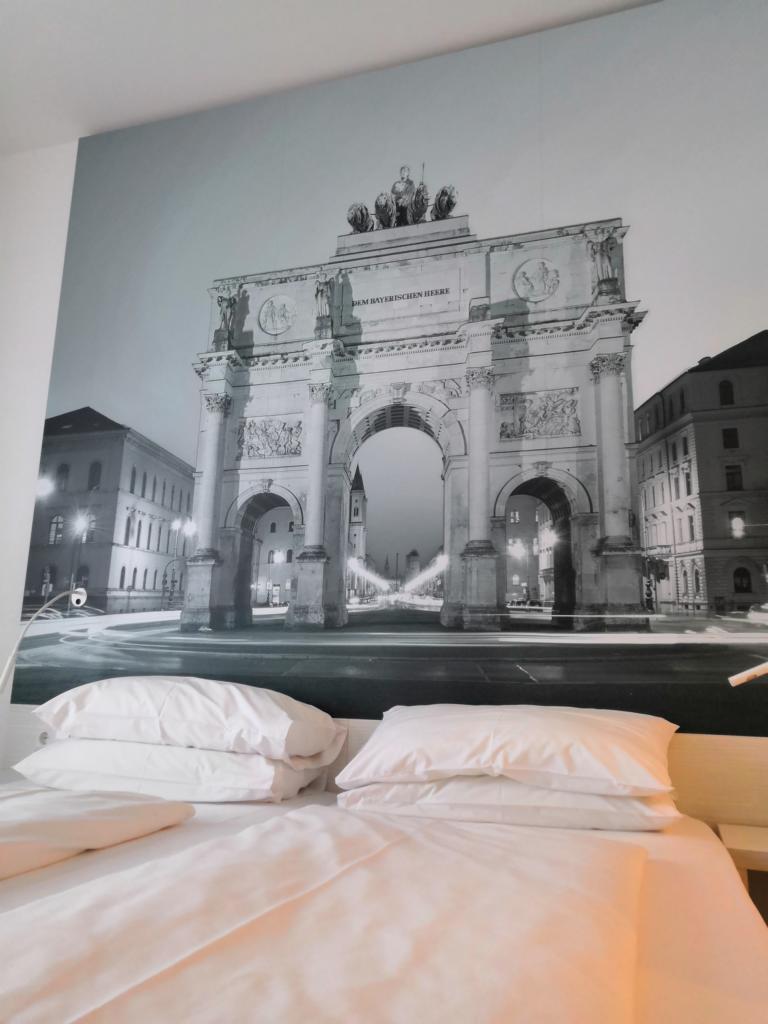
Where the Siegestor is (and why it’s here)
The Siegestor marks the boundary between the university quarter (Maxvorstadt) and Schwabing, both districts known for its bustling atmosphere.
It is an impressive triple-arched gate, constructed in the classical style. It stands 21 meters (69 ft.) high, and 24 meters (79 ft.) wide. The most prominent feature is the 22-ton quadriga atop the arch, featuring a lion-drawn chariot carrying Bavaria, the allegorical personification of the State of Bavaria.
Commissioned by King Ludwig I of Bavaria, the Siegestor was designed by Friedrich von Gärtner, who drew inspiration from Rome’s Arch of Constantine. Construction began in 1843 and was completed in 1852, shortly after Gärtner’s death, under the supervision of Eduard Metzger. Ludwig I, known for his passion for art and architecture, envisioned Munich as a magnificent cultural capital, and the Siegestor was an integral part of this ambitious urban plan, marking the northern entrance to his grand boulevard, Ludwigstraße
A quick look at the history of the Siegestor
Originally, the gate was dedicated to the glory of the Bavarian army and served as a monument to its victories during the Napoleonic Wars as well as the Franco-Prussian War 1866 where Bavaria fought side by side with Prussia against France. Intricate reliefs and sculptures adorn the gate, depicting battle scenes and allegorical figures representing victory, valor, and the various regions of Bavaria.
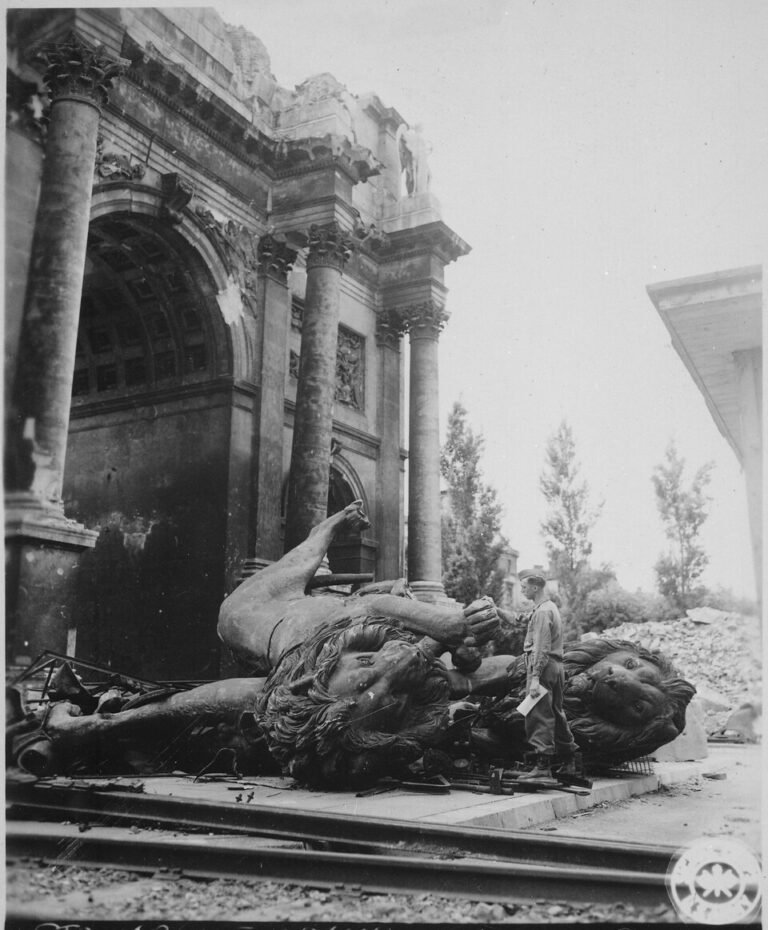
Like much of Munich, the Siegestor suffered significant damage during World War II. However, unlike many other structures that were restored to their original state, the Siegestor underwent a significant transformation. Instead of fully restoring its war-torn elements, it was intentionally left with some scars, serving as a powerful reminder of the devastations of war.
Furthermore the inscription on the downtown-facing side of the arch was changed to: “Dem Sieg geweiht, vom Krieg zerstört, zum Frieden mahnend” (Dedicated to victory, destroyed by war, urging peace). This profound alteration transformed the monument from a celebration of military success into a reminder for peace, reflecting Germany’s post-war ethos.
The other side still reads “DEM BAYERISCHEN HEERE” (To the Bavarian Army)
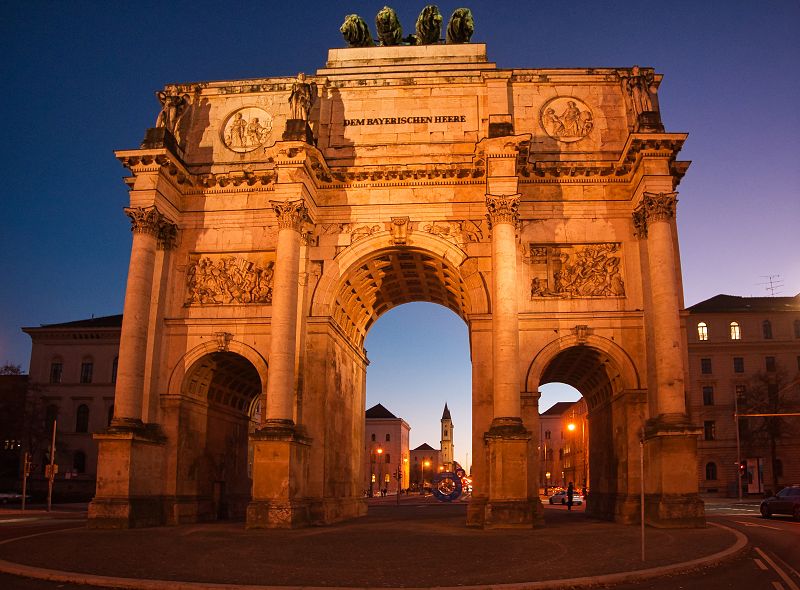
Experiencing the Siegestor Today
Even if you only spend five minutes here, a few details are worth noticing:
- Admire the Architecture: Appreciate the classical design and the detailed sculptures that tell a story of Bavaria’s past.
- Reflect on the Inscription: Pause to consider the profound message of peace etched into its stone.
- Stroll Ludwigstraße: Walk south from the Siegestor down the grand Ludwigstraße, flanked by impressive historic buildings, towards Odeonsplatz and the city center.
- Explore Schwabing and the Englischer Garten: Head north or east from the gate to immerse yourself in the lively districts of Schwabing and Maxvorstadt or relax in the expansive green oasis of the Englischer Garten, only a short walk west of the gate.
The Siegestor is more than just an archway; it’s a monumental witness to Munich’s history, a symbol of resilience, and a lasting plea for peace. Make sure to include this iconic landmark in your Munich itinerary for a deeper understanding of the city’s rich history.
Practical Tips for Your Visit
- Best Time to Visit/take photos: Sunny days in the late afternoon / early evening for warm tones and sunset vibes. Best photo angles are From Ludwigstraße looking north with the arch centered.
Be aware, that Siegestor stands in the middle of a busy arterial road. It can sometimes be difficult to take photos without cars. If you like to shoot a pro-photo, try going there after 10 p.m. when streets are getting empty.